
- Nerves or Excitement? They aren’t too different.
Your body reacts the same way to both nerves and excitement. The same hormones – like adrenaline and testosterone – are released, your heart beats faster, and you become more alert. The difference lies in how we interpret these sensations: whether we see them as nerves or as excitement.
So, frame these nervous feelings as excitement, tell yourself either out loud or in your head:
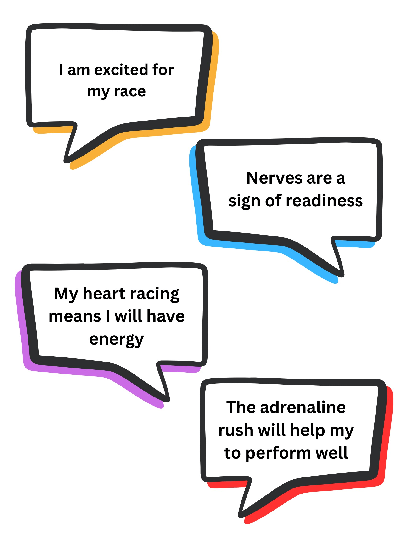
Frame these feelings positively: your body’s reaction is the same, it’s only your perception of the race that turns them into nerves or excitement.
2. Visualise Past Positive Experiences
This will remind your brain you’ve done this before and had a positive impact, therefore reducing the intensity of nerves and increasing confidence before your race.
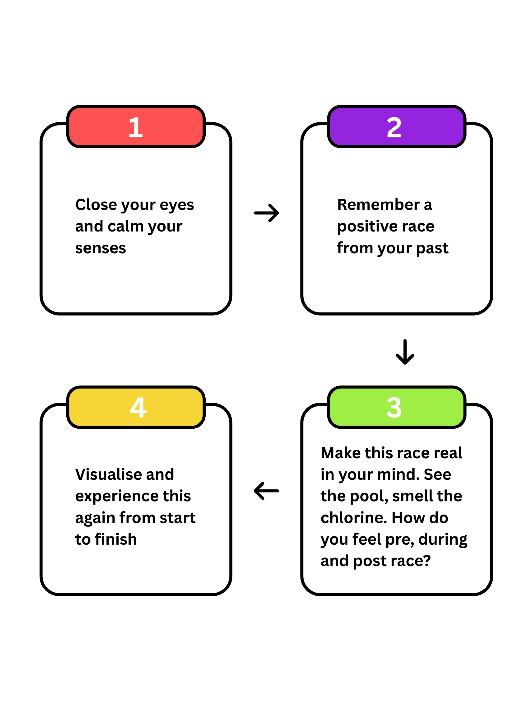
On race day, your brain may forget the positive experiences you’ve had in swimming. Bring them to the forefront of your mind – they’re proof that you have every reason to feel confident.
3. Breathing Techniques
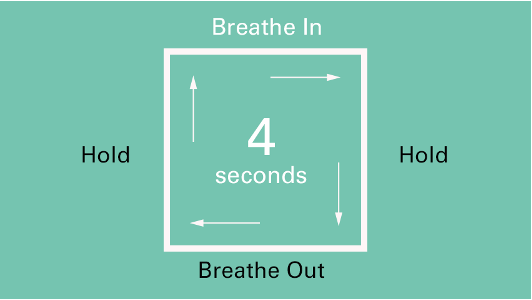
Try simple and effective way to reduce the physical feelings of nerves. Regulating and focusing on your breathing is researched to reduce heart rate, reduce the release of stress hormones, and create a sense of calmness.
There are two techniques typically used by athletes:
Box Breathing:
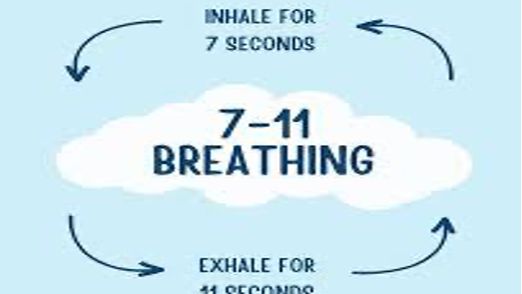
7/11 Technique
4. Have A Pre-Competition Routine
Having a pre-race or pre-competition routine helps you stay focused on the present moment – on what you’re doing now, rather than worrying about the past or future – and feel prepared.
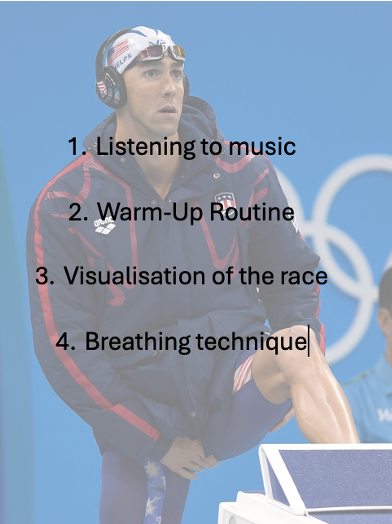
Your routine should be personal, designed by you so that it makes you feel ready for the race. It might include four or five elements, such as warming up, speaking with coaches, deciding when to begin focusing, stretching, or listening to music. It’s up to your own judgment when to start this routine, depending on what best fits into your schedule.
Below is an example of Michael Phelps going through his pre-race routine.
 H.Walshe Sport Psychology